Having a great product is all well and good, but if nobody finds out about your services and you are offering great value, then it won’t be very successful.
This is where digital marketing comes into play.
Customers will often look up different brands and research options. They will look up search engines and AI tools. This means businesses need to have a strategy that allows customers to find you, trust you and take action.
Understanding the importance of digital marketing is the first step.
Quick Answer: What is the importance of Digital Marketing?
Digital marketing can help increase brand awareness, reach the right people and generate quality leads. You will see the effectiveness of your marketing efforts.
With search engines, websites, social media, email and digital advertising you, will be able to interact with customers easily to see how they are acting and improve your campaigns with real data.
7 Benefits of Digital Marketing for Your Business
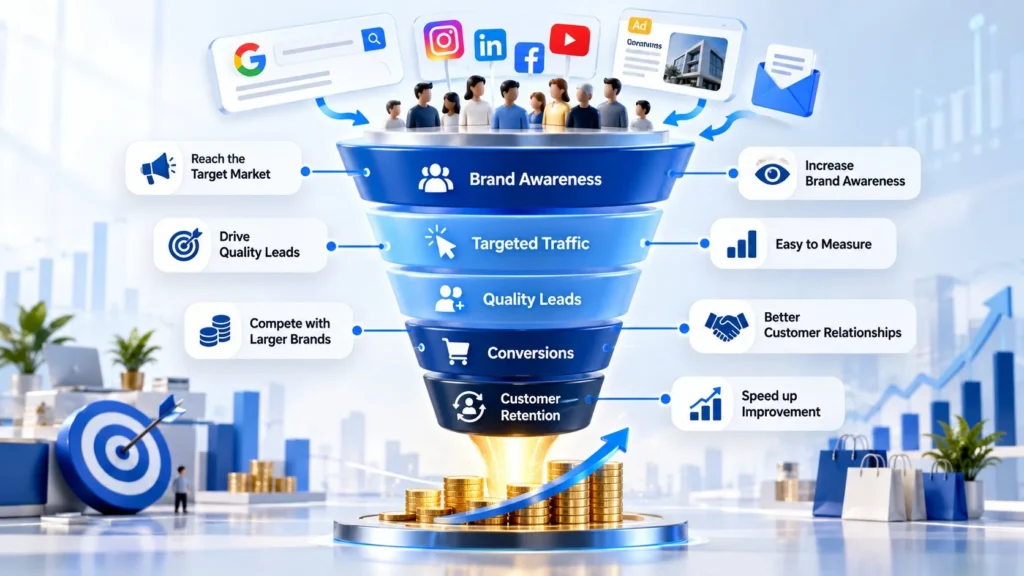
1. Reach the Target Market
Traditional marketing can be quite wide-reaching, however digital marketing allows you to target specific individuals, using factors like location, interests, search intent and online behaviour.
For example, an interior design company based in Delhi will use local SEO and targeting to reach homeowners looking to renovate their homes.
2. Increase Brand Awareness
Customers often do their own research on a business. Providing a professional website with helpful blog posts, consistency throughout branding and authentic reviews will increase your credibility.
- Creating helpful educational content.
- Social Media consistency.
- Providing clear information about your services and prices.
- Authentic Reviews and Transparent business practices.
3. Drive Quality Leads
Instead of just driving traffic to your site, you can drive targeted traffic to your site: Using SEO, your landing pages and lead forms will help target people looking for your products/services.
4. Easy to Measure
Using digital tools you can easily track website traffic, ad clicks, leads and sales. This will give you an insight into what is driving your business goals and areas to improve.
5. Compete with Larger Brands
Small businesses can become authorities within their niche by providing helpful content, optimising local searches, targeted campaigns and great customer service. They won’t need to spend as much on advertising as larger brands.
6. Better Customer Relationships
You can use email marketing, social media and personalisation to get in contact with your customer base.
By providing good follow-up, relevant deals and fast replies you can encourage repeat custom and referrals.
7. Speed up Improvement
As everything is digital you can trial and adapt your campaigns based on how they perform. You can compare your adverts, improve your landing pages and improve your messaging, rather than guessing.
All of these will depend on how well you execute digital marketing. While it is measurable there are still factors that will affect your results. This includes your offer, competition, budget, customer experience and strategy.
Which Digital Marketing Channels Should Businesses Use?
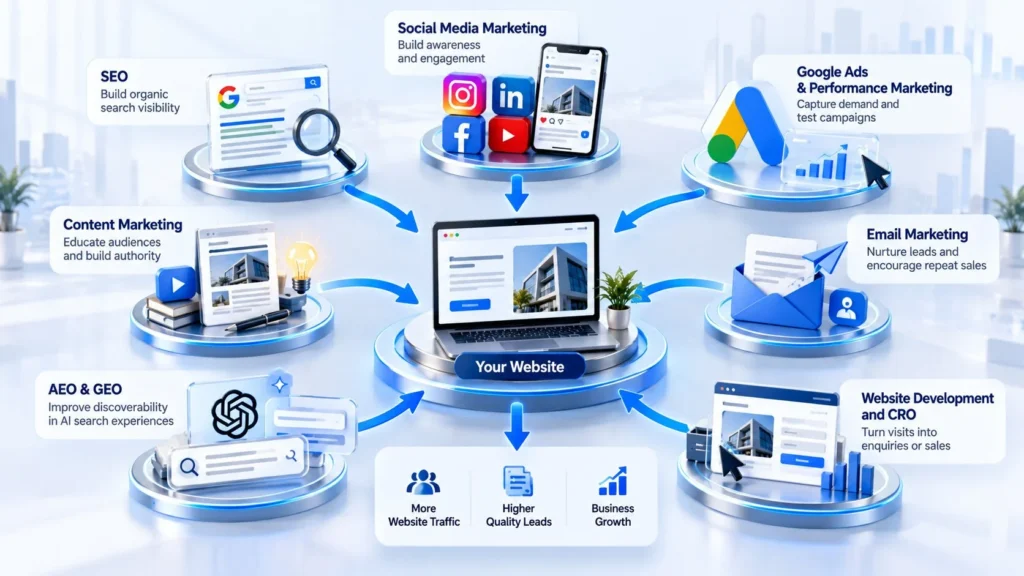
Different channels serve different purposes. The right combination depends on your audience, budget, and growth objectives.
| Channel | Primary purpose | Best suited for |
| Search Engine Optimization (SEO) | Build organic search visibility | Long-term discovery |
| Social Media Marketing | Build awareness and engagement | Consumer brands and communities |
| Google Ads and Performance Marketing | Capture demand and test campaigns | Businesses seeking targeted traffic |
| Content Marketing | Educate audiences and build authority | B2B and considered purchases |
| Email Marketing | Nurture leads and encourage repeat sales | Existing leads and customers |
| Website Development and CRO | Turn visits into enquiries or sales | Businesses with conversion gaps |
| AEO and GEO | Improve discoverability in answer-oriented and AI search experiences | Brands building search visibility |
Main thing to take away from this is that these channels are best used together. Whilst advertising can drive people to your site, a confusing website or poor offer will stop them becoming customers.
Why Is Digital Marketing Important In Business?
A customer can come across your brand via various channels such as Instagram, research on Google, reading reviews, using an AI search tool and visiting your site.
Businesses should strive to look at their options holistically.
The key areas are:
1. Making sure customers can find the right products/services easily. By providing helpful content and making sure your website is technically accessible.
2. Being able to answer questions your customers may have. Being an expert whilst also having accurate and accessible content.
3. Providing conversion ready content. Making sure your visitors can easily understand what you offer, decide if they can trust you and move forwards.
Google has confirmed that core SEO considerations are still key to success in Generative AI search. Having helpful, unique content and ensuring your website has solid technical foundations are key, rather than trying to cut corners with AI searches.
Google’s official AI Search guidelines.
How to Build a Digital Marketing Strategy in 5 Steps
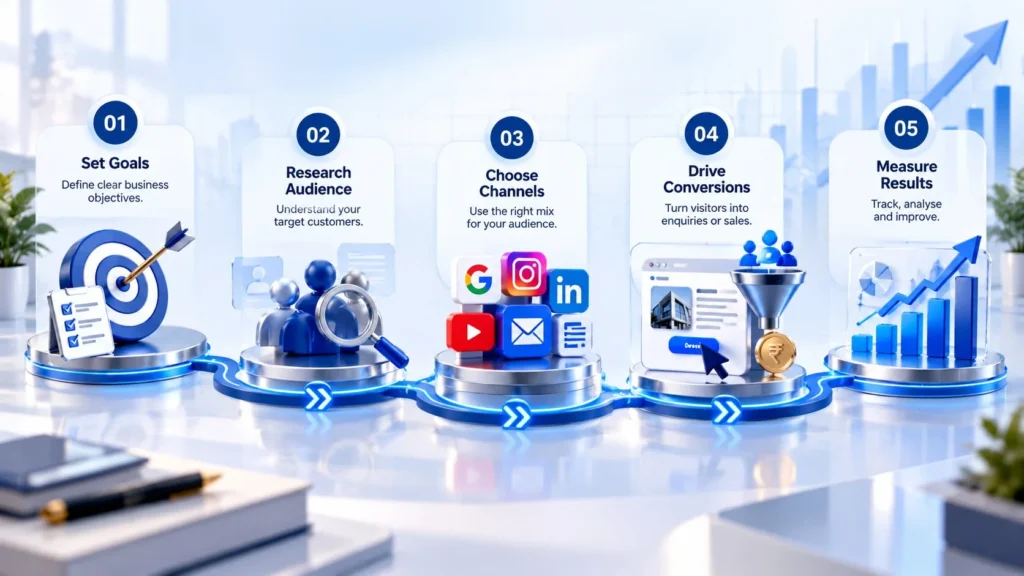
Don’t try to use every possible channel straight away. Start with a narrow strategy.
1. Start with One Main Objective
Start with one main objective. Focus on something that can be measured like generating quality leads, sales online or increasing local visibility.
2. Research your audience
Understanding your audience will help you understand their concerns, what influences their buying decisions and any objections they may have. What are they looking for?
3. Choosing the correct channels
Ensure you’re using the channels most relevant to your audience.
4. Clear funnel to conversion
Ensure your campaigns and content are linking through to a useful landing page, enquiry form or purchase.
5. Track Your Metrics
Track your metrics. Monitor the metrics that matter. For example, how many quality leads are you getting? What is your conversion rate? Cost per lead? Return on Ad Spend?
Example:
A B2B software business may choose to create some informative blog posts, optimise their service pages and use LinkedIn. However, it is important to measure whether they are successful by looking at how many relevant enquiries/sales opportunities they receive.
Common Digital Marketing Mistakes to Avoid
You can still get stuck if you do not have a clear strategy.
1. Focusing on Likes and Followers Rather Than Business Goals
Focus your engagement metrics around actual goals.
2. Not Tracking Conversions When Running Ads
Ensure you have proper tracking in place before putting more money into your campaigns.
3. Not Focusing on Your Website
Improve the usability on mobile, speed, ease of navigation and clear calls to action.
4. Content Is Too Similar
Provide unique insights and practical examples to real questions that customers may have.
5. Not Focusing on the Right Platforms
Know which channels to focus on based on your audience and resourcing.
6. Expecting SEO Results Quickly
Typically organic results require consistent work and analysis.
Grow Your Business With Oricmeta
Choosing the correct digital marketing strategy can be difficult with many factors to consider such as SEO, Advertising, Branding, Website, and AI search.
Oricmeta can help your business gain a better digital footprint with our integrated marketing and technology services. We offer SEO, AEO, GEO, Website, UI/UX, Branding, Social Media Marketing, Performance Marketing, Google Ads and Conversion Rate Optimisation.
Depending on what you want to achieve we can help your business with:
1. Better Visibility – Improve your website structure, content and search.
2. Brand Recognition – Ensure your visuals, messaging and social media are consistent.
3. Targeted Traffic – Targeted campaigns based around your audience’s needs.
4. Better Conversions – Improve any issues on your website and make it clear how you can turn visitors into enquiries.
5. AI Ready – Create useful, trustworthy and easy to understand content.
Avoid looking at these as separate services and instead integrate your marketing to ensure you’re targeting the right audience and making it easy for your customers to choose you.
Take a look at Oricmeta to find out more about our digital marketing and technology services.
Final Thoughts
Digital marketing can help meet business goals by increasing your visibility. You will be able to reach people who might be interested in what your business has to offer and help build credibility with them. They will have an understanding of what you provide and improve how you attract and retain customers.
By knowing what your main challenge is to growing your business, you will be able to create an effective strategy by using the right channels and ensuring you are gaining real results. This will help to create a cohesive strategy to ensure that your digital presence becomes an asset.
To increase your online presence visit Oricmeta Technologies to learn more about our Digital Marketing solutions that will help you meet your business goals.